In 2005, a group of water resource experts issued a statement cajoling decision-makers to privilege the needs of nature in their water management strategies. In effect, their Brisbane Declaration popularized the idea of environmental flows, a concept that focuses attention on the quantity, quality and timing of water required to sustain a dependent ecosystem.
In this essay I ask how well this concept has held up against the political pressures of popularity. To this end, I examine the various meanings inscribed on the concept of environmental flows as it has traveled across time and space. My findings uncover a few observations regarding the need for greater attentiveness to concept management. The findings also reveal a few surprising revelations about the forces at work behind conceptual alteration and the prospects of militating against these forces in our current global condition of heightened economic anxiety.
In Central
Europe, the difference between the words ‘national’ and ‘nationality’ developed
into a very significant distinction, viz., between the ‘nation-state’ on the
one hand and the ‘state of nationalities’ on the other. The first stood for one-nation state and the second for multi-national state. This became a hotly
debated issue between the leading nation and national minorities in the
successor states of the Austro-Hungarian and Ottoman Empires.
This
article aims at gaining insight into the lives of human trafficking victims in
the United States and, more specifically, female domestic minor victims of sex trafficking. Understanding how family dynamics and the breakdown of the
American family have created vulnerabilities in victims to being lured into the
life of domestic minor sex trafficking in America is an important research
study.

Through the historical case study research here, survivors Stories and
tragedies will come to life. In this study, an examination was made to understand what particular lure became effectively used to exploit the child through sex trafficking and what tactics or recruitment methods traffickers used, as well as the pimp characteristics that led to trust in the trafficker.
Prior exposure to poverty, abuse in the home, exposure to drugs and alcohol,
and basic needs for love and affection, food, clothing, shelter and security
are all contributing factors to susceptibility, the very vulnerabilities that
become preyed upon by human traffickers.
Sociologists
have been probing the influence of parents and peer groups on young adolescents
for ages. While the parents play a crucial role in meeting the basic needs along with education and healthcare, peer groups provide the necessary
emotional support in sharing their views and interests and acts as stress
busters. When probed whether parental support or the peer group influence that
shape the personalities of the young adolescents, a significant co-relation
between the parental bond and attachment rather than the peer group pressure
that shapes the mental and behavioral frames of the young adolescents.
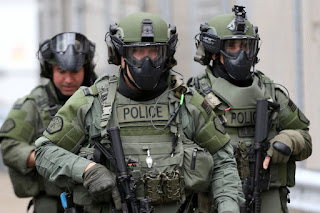
Qualitative
data from media accounts and a law enforcement dispatch log is fused with
quantitative data on SWAT from both the Multi-Method Study of Police Special
Weapons and Tactics Teams in the United States, 1986-1998 and a related report
to the U.S. Department of Justice. Chi-square tests of significance were applied. Results found Dorner possessed and used weapons common to SWAT suspects, SWAT and Dorner used deadly force, he was barricaded, and he
committed suicide. Statistical significance was found for the following; SWAT
uses deadly force more often than suspects, narcotics warrant suspects are
fired upon by SWAT more than in other types of incidents, and hostage takers
are fired upon less than in other types of incidents.


